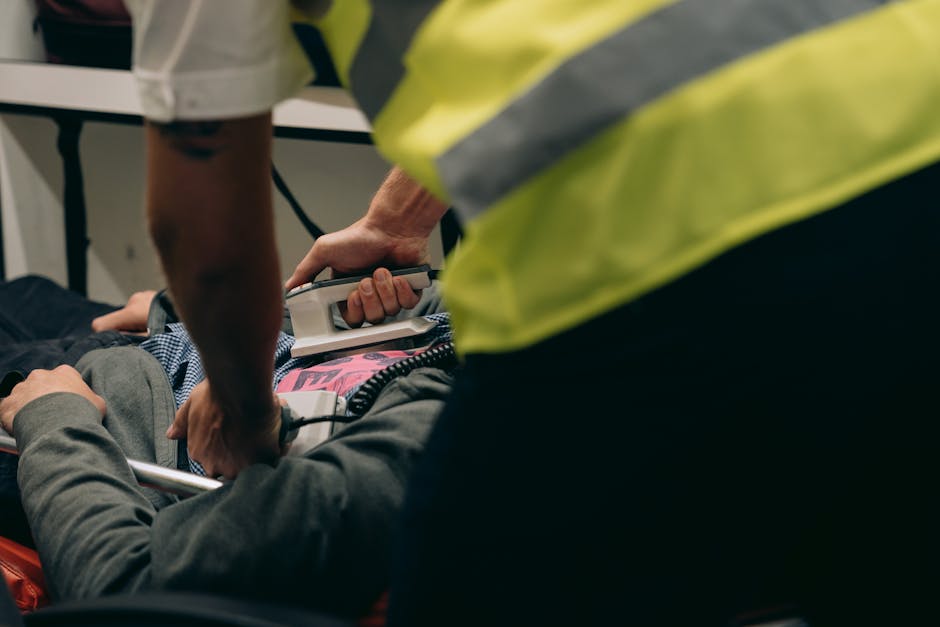
Seconds count. With crush injuries and traumatic amputations, they count in a way that most workplace emergencies do not.
Ireland has seen too many of these incidents recently. Farm machinery, construction equipment, vehicles. The pattern is consistent and the outcomes are often catastrophic, not because help did not arrive, but because the first ten minutes went wrong. Most first responders, including trained ones, have never managed a crush injury or a traumatic amputation in real life. When it happens, the gap between knowing the theory and executing under pressure can cost a limb or a life.
Here is what the evidence and the protocols actually say.
Understand What You Are Dealing With
A crush injury is not just a bad bruise. When tissue is compressed for any significant period, particularly muscle tissue, the cells begin to break down. Release the pressure too fast without medical support in place and you risk crush syndrome, where a sudden flood of myoglobin and potassium from destroyed muscle cells hits the bloodstream. The result can be cardiac arrest or acute kidney failure. This is not hypothetical. It kills people who survived the initial entrapment.
A traumatic amputation is different but equally brutal. The limb is partially or fully severed, usually by machinery. Bleeding can be catastrophic and fast. However, the body's own vascular response sometimes slows blood loss initially, particularly in complete amputations where vessels contract and constrict. Do not let that fool you. The window closes.
Know which you are dealing with before you act, because the immediate priorities differ.
Do Not Move the Person Without a Plan
The instinct is to pull them free. Resist it. Unless there is an immediate secondary hazard, fire or further collapse, do not move someone who is entrapped until you understand what moving them will do.
For entrapments under machinery or vehicles, call 999 immediately and tell them specifically what has happened. Crush injury with entrapment. That triggers a different resource response than a standard trauma call. The National Ambulance Service has protocols for prolonged field care and they need time to deploy the right support.
While waiting, keep the person calm, keep them warm, and monitor their airway. A person in severe pain and shock will fight you. Talk to them. It matters more than most first aid interventions at this stage.
Control Bleeding: Tourniquet Application
For a traumatic amputation with active haemorrhage, a tourniquet is the correct intervention. There has been a long history of reluctance around tourniquets in civilian first aid, concern about tissue damage, about doing harm. That debate is settled. Applied correctly, a tourniquet saves lives. Delayed application costs them.
Apply the tourniquet 5 to 7 centimetres above the wound on the limb. Not over a joint. Tighten it until the bleeding stops, not just slows. Write the time of application on the device or on the person's skin with a marker if you have one. Tell the paramedics immediately when they arrive. They need that information.
Commercial tourniquets like the CAT (Combat Application Tourniquet) or the SOFTT-W are what you want. Improvised tourniquets from belts or cloth are a last resort. They rarely generate enough pressure and the width matters. A narrow improvised tourniquet can cause nerve damage without stopping arterial blood flow.
If you work on a farm, in construction, or in any environment where machinery-related amputations are a realistic risk, there should be a commercial tourniquet in your first aid kit. Full stop.
Manage the Amputated Part
If the limb or digit is fully severed, recovery and preservation matters. Replantation is not always possible, but where it is, the condition of the amputated part is a deciding factor.
Do not put it directly on ice. Wrapping tissue in a wet sterile dressing, placing that in a sealed plastic bag, and then putting that bag in iced water is the correct approach. Direct ice contact causes frostbite to the tissue and rules out replantation. Keep it cool, not frozen.
Get it to the hospital with the patient. Label it clearly if you can. This sounds obvious. In the chaos of a serious trauma call, amputated parts have been left at the scene.
Crush Syndrome: The Hidden Danger
If someone has been trapped for more than 15 minutes, assume the risk of crush syndrome is real. Do not release the entrapment without paramedic or medical guidance if at all possible. In practice, that is not always an option, but the principle stands. The release is a medical event, not just a mechanical one.
Intravenous fluids before and during release are the primary intervention for crush syndrome in a hospital or advanced pre-hospital setting. A first responder cannot deliver this. What you can do is communicate clearly to ambulance control that the entrapment has been prolonged. They will adjust their response.
Keep the person still after release. Monitor their breathing and level of consciousness. If they deteriorate rapidly after being freed, crush syndrome is the likely cause.
What Your Workplace Owes You
A fire extinguisher is legally required. A defibrillator is increasingly standard. A tourniquet and trauma dressings cost less than fifty euro and take up less space than a folder. If your site works with plant, machinery, or vehicles, the risk profile justifies the kit. Full trauma response training is better still. Bleeding control courses, often called Stop the Bleed, run regularly in Ireland and take half a day.
The protocols exist. The kit exists. The training exists. What too often does not exist is the decision to have it ready before someone needs it.
When the machinery stops and someone is on the ground, the next person through that gate is the first responder. Make sure they have something more than good intentions.