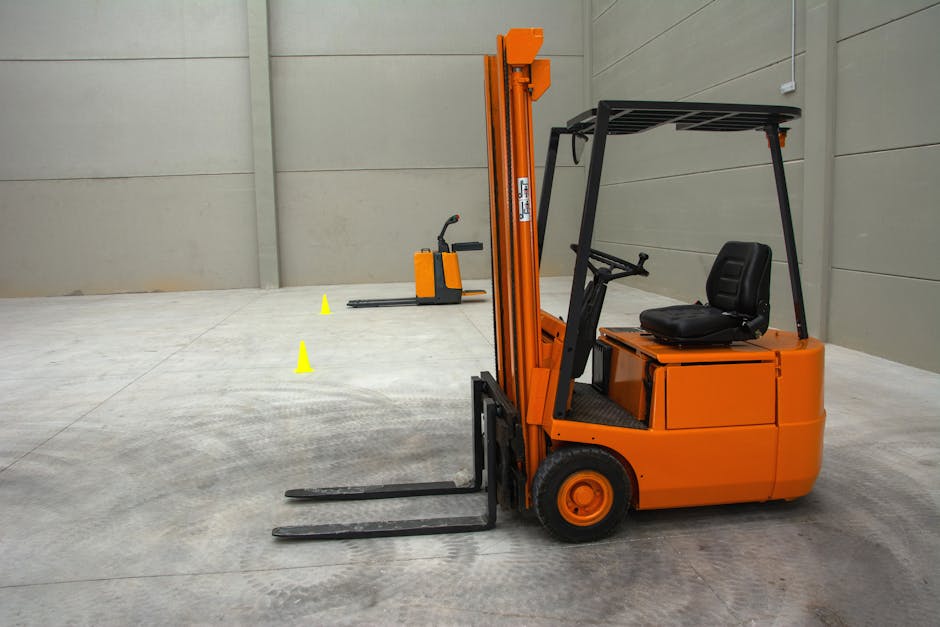
Every serious forklift injury on record happened on a site where someone thought they had it covered.
The training was done. The certificates were filed. The toolbox talk happened sometime last quarter. And then a pedestrian ended up with a crushed foot, or a racking collapse put someone in an ambulance, and nobody could explain how it went wrong because everything looked fine on paper.
The Certificate Is Not the Control Measure
This is the core problem. Forklift training gets treated as a one-time event that transfers competence permanently. It does not work that way. A worker who completed a Counterbalance or Reach Truck course two years ago, on a quiet training yard, has been shaped since then by the actual conditions of your site. The shortcuts. The pressure to move faster. The loading bay where the floor markings faded six months ago and nobody repainted them. The site adapts the worker far more than the training does.
Irish safety law under the Safety, Health and Welfare at Work (General Application) Regulations is clear that employers must ensure workers are competent, not just trained. Competent means able to perform the task safely in the actual environment. That gap between classroom competence and live-site competence is where people get hurt.
The HSA's inspection data consistently shows forklift incidents clustering around predictable failures: unsegregated pedestrian and vehicle routes, excessive travel speeds, overloading, poor visibility, and operators who know the rules but have stopped applying them because nobody checks.
What 'Routine' Actually Means
The word routine is doing dangerous work on most sites. When a task becomes routine, attention narrows. The operator who has made the same run from the goods-in door to the storage area four hundred times stops fully processing the environment on run four hundred and one. That is not negligence. That is human neurology. The system is supposed to account for it. Most sites do not.
Blind spots alone account for a significant share of forklift fatalities and serious injuries in Ireland. An operator reversing a loaded truck with a restricted sightline is relying on mirrors, on habit, and on the assumption that no pedestrian has stepped into the zone since the last time they checked. On a busy site under time pressure, that assumption gets tested hundreds of times a day.
The incidents that look like freak accidents usually are not. They are the moment when several small failures arrived at the same point simultaneously. The floor marking was gone. The pedestrian took a shortcut. The operator was on his third hour of continuous operation. The banksman was on a phone call. Remove any one of those factors and nothing happens. Stack them together and you have a serious injury report to write.
Where Risk Assessments Go Wrong
Most forklift risk assessments on Irish sites are generic. They were written when the operation was set up, they reference the right hazards, and they have not been meaningfully reviewed since. The site has changed. The throughput has increased. A new racking system went in. A section of the warehouse got repurposed. The risk assessment did not follow any of it.
A live risk assessment for forklift operations needs to cover specific routes, not general movement. It needs defined pedestrian exclusion zones with physical separation, not painted lines that will be ignored under pressure. It needs load limits per truck per area, speed limits that are enforced rather than posted, and pre-use checks that are actually completed rather than signed off as completed.
The pre-use check is worth dwelling on. Tyre condition, mast chains, hydraulic hoses, horn, lights, brakes, seatbelt. These take four minutes. They get skipped constantly. Not because operators are reckless, but because the morning is busy, the truck was fine yesterday, and nobody has ever been pulled up for skipping it. When machinery incidents reach the courts, the absence of documented pre-use checks becomes one of the most damaging pieces of evidence against an employer.
Refresher Training That Actually Works
Annual refresher training delivered as a classroom recap is largely theatre. The operator sits through slides they have seen before, signs a form, and goes back to doing exactly what they were doing. Competence is not refreshed. The tick-box is satisfied.
Effective refresher training happens on your site, with your equipment, on your actual routes, assessed by someone who will tell you honestly when the operator is doing something unsafe. It includes scenario work: what do you do when the racking is partially blocking your sightline? What do you do when you are asked to carry a load that looks over capacity? What do you do when a pedestrian walks into a restricted zone?
Most operators have never been asked those questions after their initial training. Many would hesitate on the answers.
Frequency matters too. Once a year is not enough for operators running trucks five days a week. A quarterly walk-and-talk with a supervisor reviewing actual practice, not stated knowledge, costs almost nothing and catches drift before it causes harm.
The Supervision Gap
Supervision on forklift operations tends to follow one of two patterns. Either there is constant direct oversight, which is impractical at scale, or there is essentially none, with the expectation that trained operators will self-regulate. Neither is a functioning safety system.
What works is periodic unannounced observation combined with a genuine reporting culture. Operators who see unsafe conditions or practices need a mechanism to raise them without it becoming a personal conflict. Speed creep, overloading, bypassed controls, unmaintained equipment: these are nearly always known within the team before they result in injury. The information exists. It just has nowhere to go.
Supervisors also need to be equipped to have the conversation when they observe a problem. Telling an operator that they observed something unsafe and expect it corrected is not a confrontation. It is the job. Sites where that conversation feels too difficult are sites where the next serious incident is already accumulating.
The Turn
Training completion is a starting point. What happens on site after the course finishes is the actual safety system, and in most workplaces that system is running on assumption and good luck rather than structure and verification. Forklift incidents are not freak events. They are the predictable output of environments where the gap between knowing and doing has been left unmanaged.
Close the gap or keep writing the incident reports.